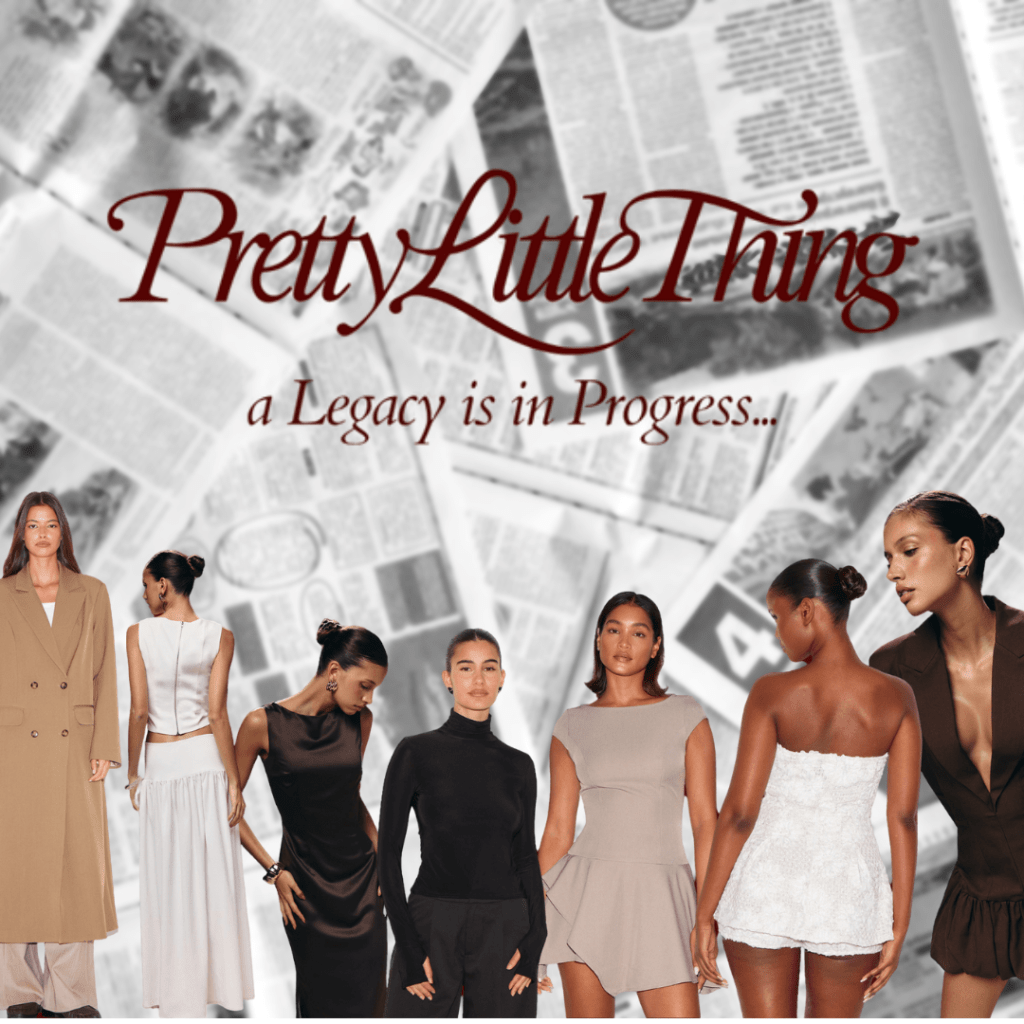
Rebranding has become an essential process for survival of fast-fashion brands in more recent years. Shein has been a key contributor to why so many brands are making such dramatic switch-ups. With their upload of 10,000 styles every day for every fashion subculture, it makes it impossible for most fast-fashion brands to keep up. Missguided is an example of one of the brands that were hit the hardest by Shein. The brand Missguided went into administration in 2022 as they struggled to turn a profit, eventually selling to Shein.
Another contributing factor to rebranding are social-political views, especially those concerned with environmental issues. There have been mass boycotts of big-name brands, including fast-fashion due to the Climate Crisis, exploitation of employees, low quality, textile waste, and the lies that come alongside this industry. People are becoming more aware, and conscious of the reality behind cheap clothing. These boycotts have encouraged more brands to switch to a middle-market fashion company.
Unfortunately, not all brands are rebranding to ‘do their part’ for the environment, but more of just a way to survive against Shien. PrettyLittleThing (PLT) had a rebrand at the beginning of March 2025, a rebrand with a lot of backlash. While they’re playing the part of middle-market, conservative fashion, the low-quality clothes made almost entirely of polyester has stayed the same. It seems obvious that there would be a negative reaction to a style change and price increase for what is fundamentally the same product line.
TV personality, Brett Staniland took to Instagram to discuss the rebrand, mentioning many of PLT’s wrongdoings post-rebrand. It’s hard to see anything but an attempt to cover-up past issues with a rebrand.
Reportedly, PLT fell to a pre-tax a loss of £6.5m for the year 2023-2024, which is a huge drop from a £22m profit from the 12 months prior. This isn’t just affecting PLT, but the entire Boohoo group.
PrettyLittleThing have a global net sales of US$256.9M for the year of 2024, compared to Shein with an estimated net sales of US$48B for the year of 2024. This shows the pressure Boohoo group face when competing with such a large company like Shein.
Boohoo group have had their own rebrand, taking over the iconic name of Debenhams. Post PrettyLittleThing rebrand, the parent company of PLT has had its own makeover to Debenhams group. This switch up happened just after the former CEO of Debenhams took control of the Boohoo group business.
The name Debenhams still holds a lot of weight in the British nations hearts, alongside other timeless middle-market storefronts like Marks & Spencer, John Lewis and Dorothy Perkins. Unfortunately in 2021 Debenhams closed all 124 of its stores after 242 years of representing the upper-middle class. While Boohoo had a significant and consistent decline after Covid-19, Debenhams have reported a 65% year-on-year revenue growth from 2023-24 after being bought out by Boohoo group.
The new tagline ‘legacy in progress’ is suggesting that PrettyLittleThing are trying to rebrand to create a brand worth remembering. The brand as it stands currently has a terrible track record and has shown nothing but a change in the sub-genre of clothes it is producing. The burgundy colourway and new logo are showing a desperate attempt for an ‘old money’ aesthetic.
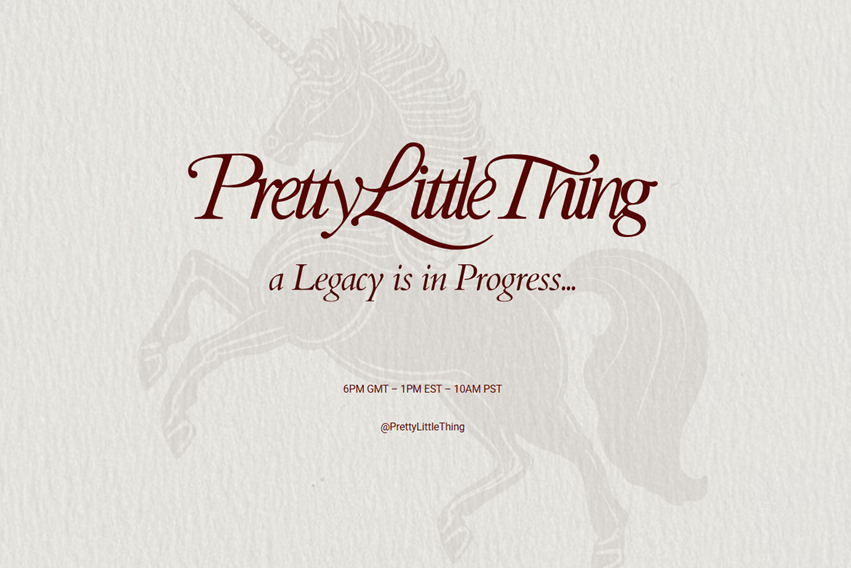
‘Old Money’, or ‘Quiet Luxury’ is part of a new TikTok fashion trend surrounding timeless style. This subgenre of fashion focuses on high-quality, designer pieces without logos, tailored clothing and classic ‘American prep’. It feels classic, with a hint toward inherited wealth of famous dynasties.
While you don’t need to be upper-class to dress this way, it’s a romanticisation of a wealth with style, which often comes with idealising the lifestyle too. This alongside the Debenhams switch in an attempt to play with the ‘Classic Englishness’ trope, similar to the ‘American prep’ aesthetics.
While this may seem harmless at first, this desire to live a gossip-girl life feeds into the need for traditional, conservative values. PrettyLittleThing has switched amongst the rise of ‘clean girl’ aesthetics, trad-wife movements, and glorification of ‘soft living’. As much as we can sit here and pretend it’s just a reaction to burnout, it is actually a creeping return to conservative gender roles. There’s been an influx of stay-at-home mum or ‘trad-wife’ influencers, showing how great life can be in a more traditional female role.
Both the PrettyLittleThing and Boohoo to Debenhams rebrand are clearly to reposition the entire group of partner companies in a position of higher class and wealth. This switch up shows a desire for not just playing conservative dress-up but living the traditional lifestyle too.
Personally, I couldn’t stand PLT before, but at least they weren’t contributing to reversing everything women have tried so hard to get. While I can understand taking over Debenhams to turn a profit, removing all individualism from PrettyLittleThing is just harmful to itself and the women who loved this brand.
 Influence, Inc.